One-in-10 men is expected to test positive for prostate cancer during their lifetime. Studies show that for 1-in-25 men, prostate cancer is the cause of death.
Prostate cancer often has no clear symptoms and without a PSA Screening Test one may never find out the disease.
After breast cancer, it is the most common cancer. However, it has a very high rate of survival, especially after early diagnosis.
The US Preventive Services Task Force, American College of Physicians, American Urological Association and American Cancer Society all recommend screening because of potential benefits as men reach certain age.
Using a few drops of blood with finger prick, this at-home PSA Screening Test measures prostate-specific antigen levels, a marker of prostate health.
Our At-Home Prostate-specific Antigen Test is easy, fast, reliable, and requires just a few steps:
Order Your At-home PSA Test Online.
Receive Your PSA Blood Test Kit and Collect Sample at Home.
Ship It Back For FREE To Our World-Class CLIA Labs (US only).
Receive Secure, Confidential, & Easy-To-Understand Report Within Days For Your Prostate-specific Antigen Test.
Prostate is a walnut-size gland in men where some of the sperm fluid is produced.
It sits below the urine bladder and urethra tube carrying urine goes through the prostate gland. As prostate grows, it squeezes the tube making it difficult to pee.
Prostate enlarges with age. This growth pushes against the urethra tube and bladder. That's why older men tend to urinate more often, with lower volume, often appearing as drips.
Enlarged prostate can also cause sexual problems.
Summary of final recommendations on PSA cancer screening by the United States Preventive Services Task Force (Source: https://www.uspreventiveservicestaskforce.org/uspstf/news/announcements):
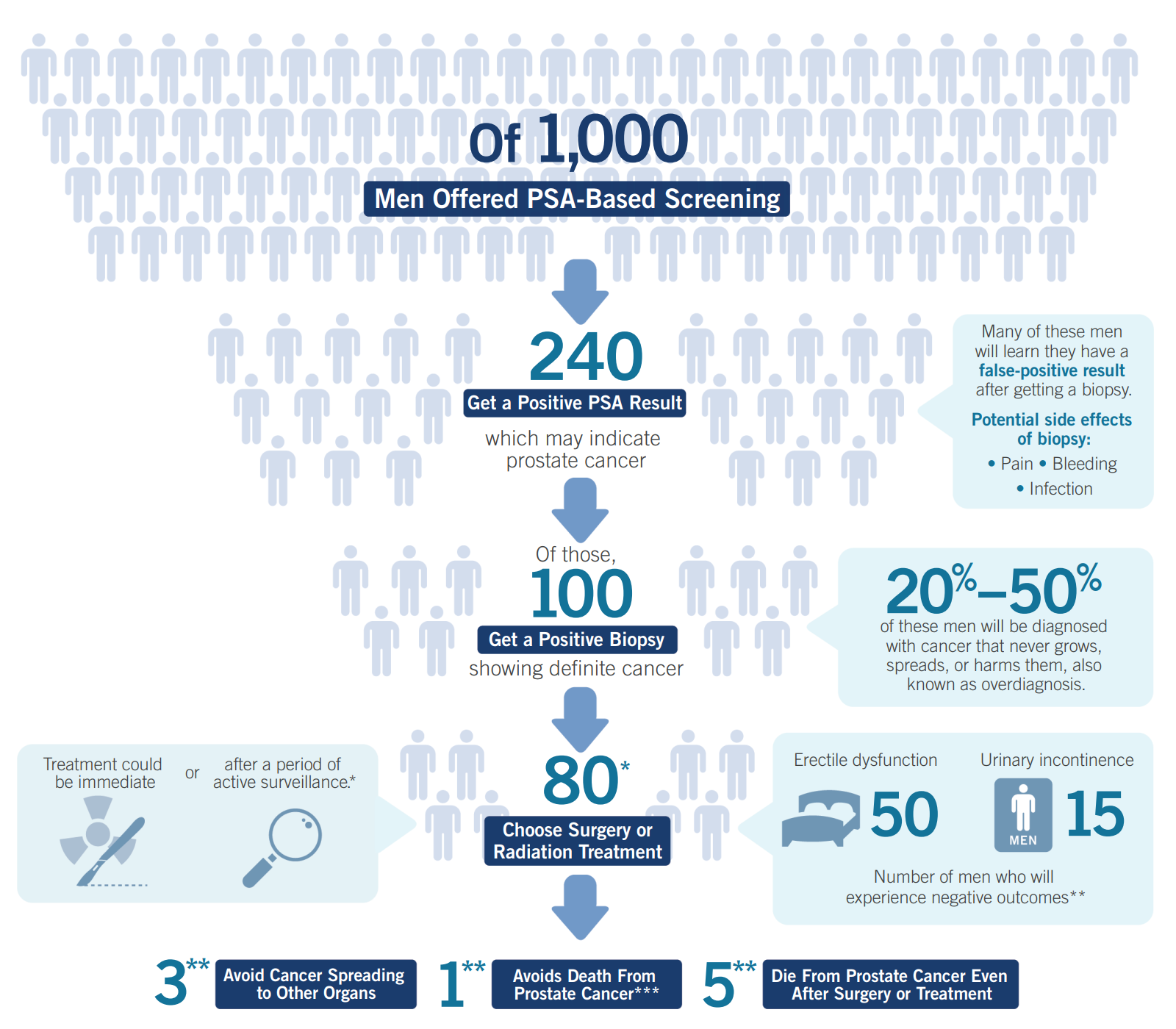
Unexpected growth in the prostate gland can lead to cancer.
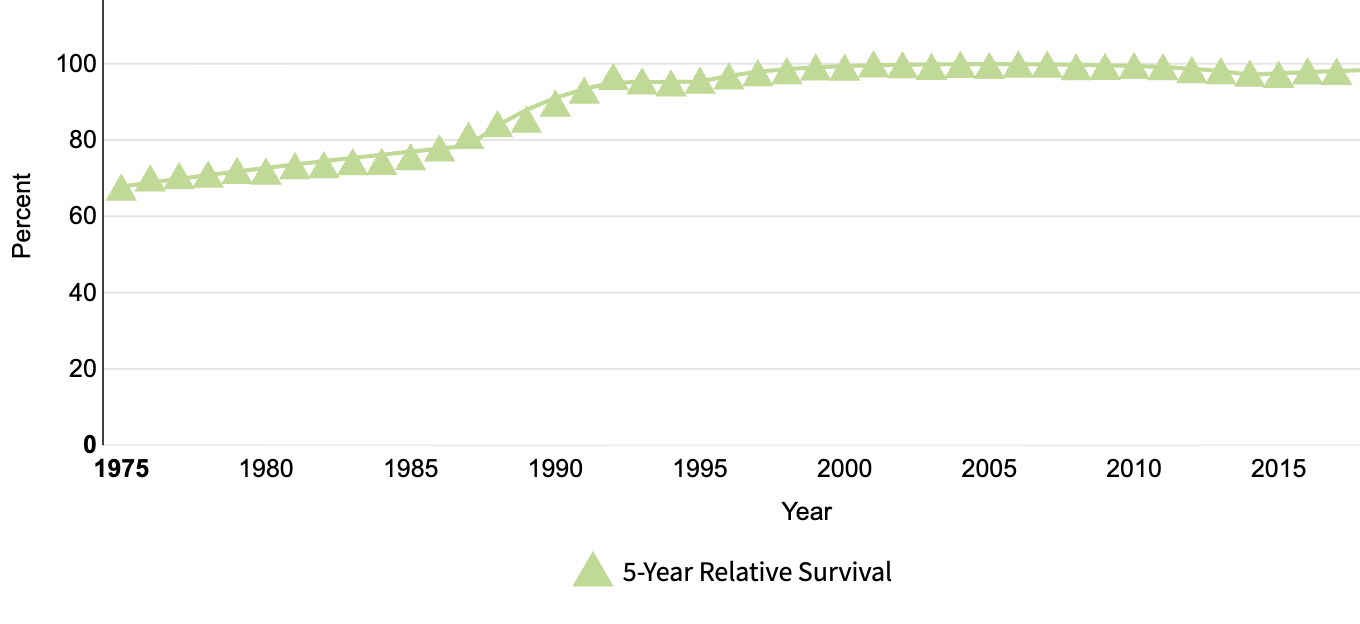
Prostate cancer is fairly common, second only to breast cancer. However, survival rate is very high (at 97.5% after 5 years) and increases if diagnosed early.
Signs of prostate cancer include weak flow of urine or frequent urge to urinate.
Other symptoms include trouble emptying the bladder completely and weak or interrupted urine flow.
Advanced stage of prostate cancer may include:
Pain in the back, groin, pelvis, or hips.
Tiredness, shortness of breath, dizziness, unusually high heart rate and anemia with pale skin.
An enlarged prostate may not always have cancer, as the growth may be benign. Such a condition is called Benign Prostatic Hyperplasia (BPH).
Enlarged healthy prostate in BPH may still require a surgery as a healthy but enlarged gland may block the urethra.
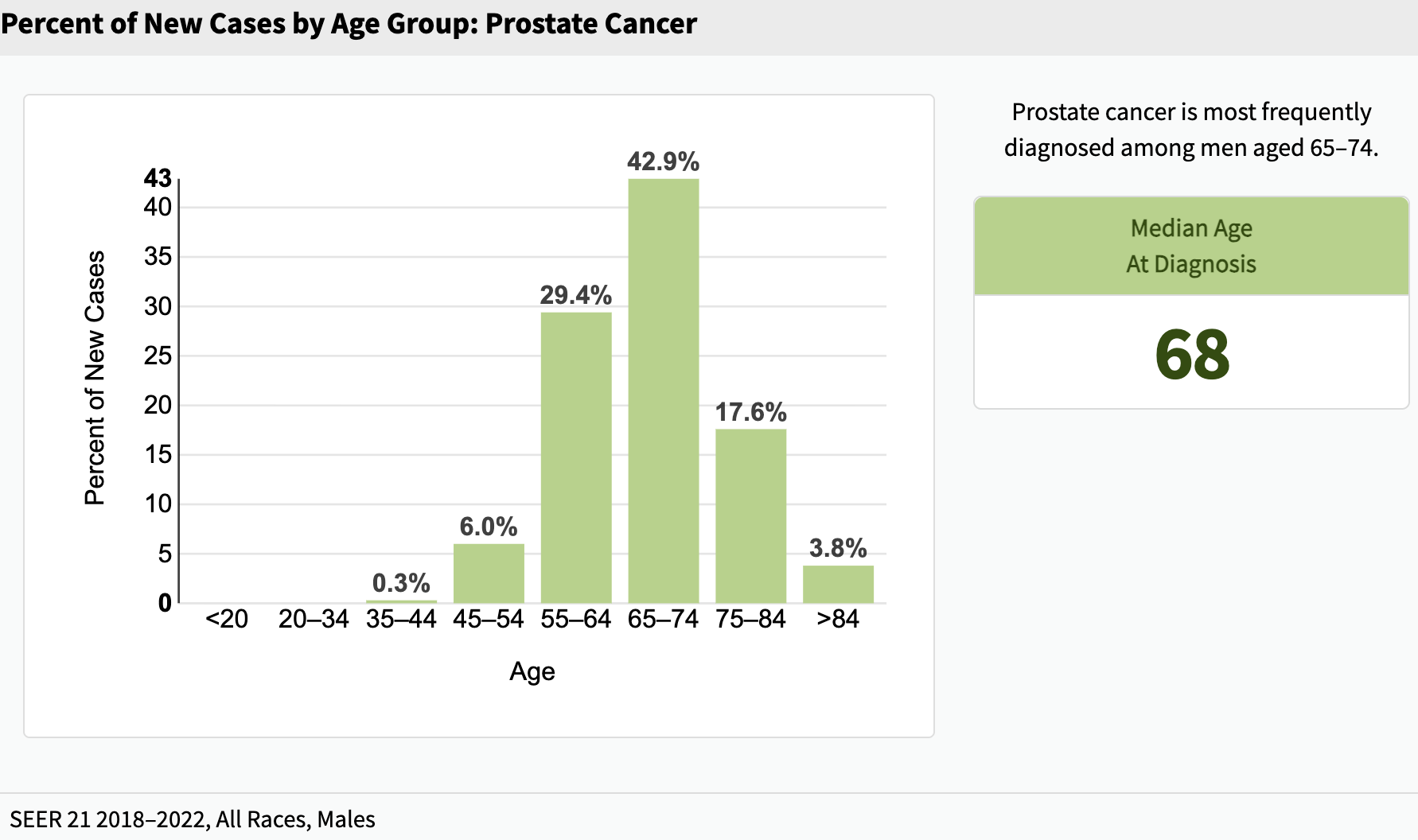
Age is the biggest factor in diagnosis of prostate growth and cancer (Source: https://seer.cancer.gov/statfacts/html/prost.html):
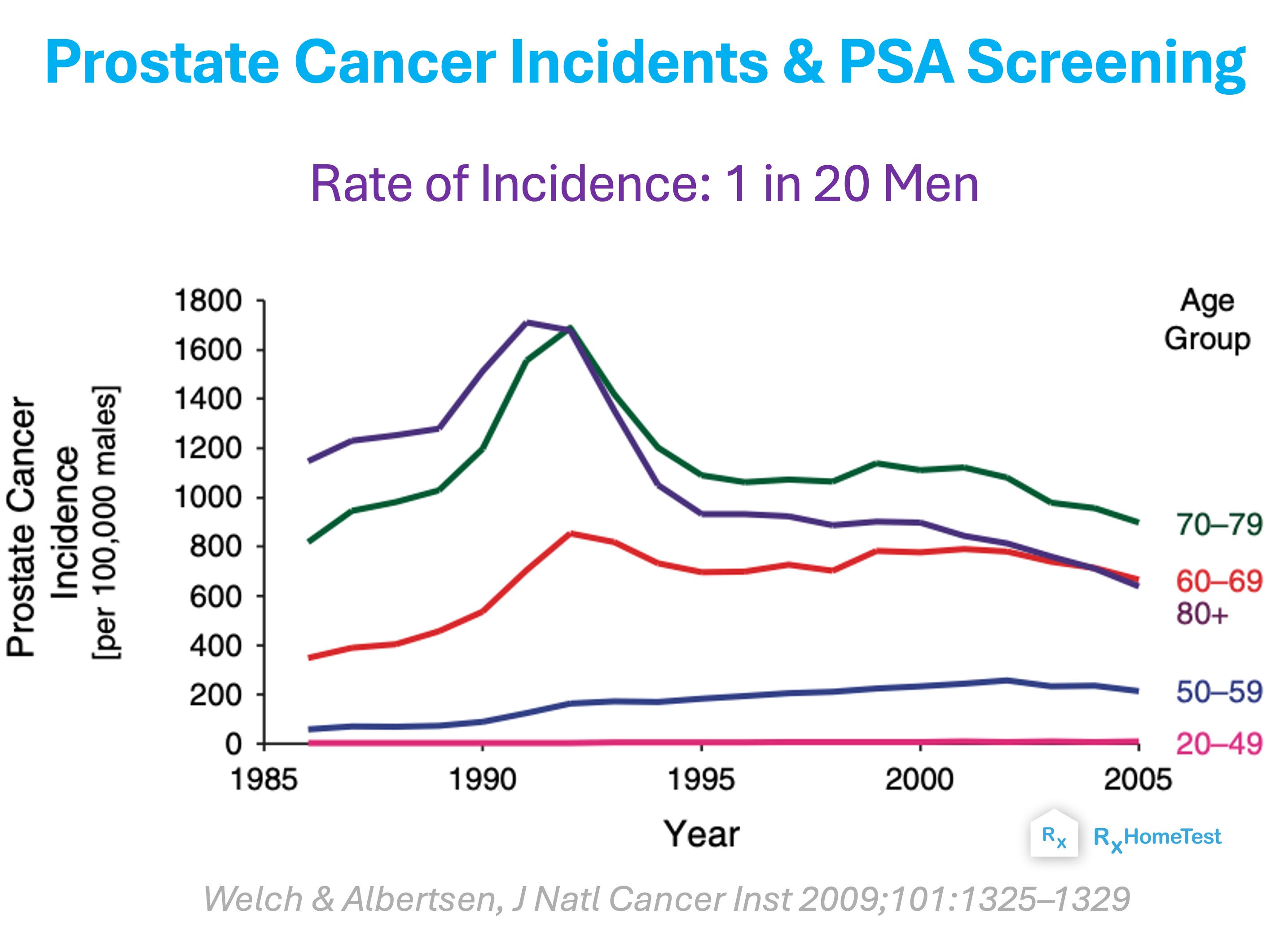
Prostate-specific antigen or PSA is a protein in the blood, made by the prostate gland.
It helps in the movement of sperms. However, some of it is also found in the blood and can be measured to assess prostate health.
Normal healthy values are below 3 ng/mL. Values over 10 are considered high-risk. Anything in between falls in the 'gray zone' and should be monitored.
Abnormally high levels of PSA are indicative of tissue growth in the gland. However, that may not always indicate prostate cancer.
One of the common first steps to check enlarged prostate is a digital rectal exam (DRE).
This test is a simple method to manually touch and assess if the prostate gland is normal size or grown.
Other methods include taking an ultrasound or MRI images. PET scan can also be used to assess the spread of unhealthy cancerous cells across the body.
The final step is often a biopsy, where an actual tissue of the gland is removed and checked for any cancer cells in the laboratory.
Depending on the aggressiveness of cancer growth, you will be given a Gleason Score. Only prostate cancer Gleason Score 7 or higher are assigned, which means some levels of risk that needs attention.
However, a blood test for prostate-specific antigen is often the first step your doctor would recommend.
The most common method to assess prostate health is the PSA screening test.
It involves taking a small amount of blood using a finger prick.
The PSA screening test checks for the Prostate-specific antigen protein levels. If the levels are high, further tests might be required.
It needs to be emphasized that PSA screening is not a test of prostate cancer, but a marker of prostate health.
PSA screening is the method of choice for large population groups to flag those with higher levels and follow up to proactively diagnose people at risk.
That's why several groups recommend PSA screening for men over 50 years of age, to increase the survival rate with early diagnosis.
The 5-year survival rate for prostate cancer is very high (Source: https://seer.cancer.gov/statfacts/html/prost.html):
Although PSA blood test for prostate cancer are highly recommended, there are known challenges.
Since almost no test is hundred percent accurate, you might receive a positive results even when there's no problem (called false-positive).
Or your numbers might be normal despite having prostate problems (false negative).
In first case, you may have to go through additional tests to confirm the results, in second case you might miss an accurate diagnosis.
The US Preventive Task Force has looked at these scenarios and still recommends men over the age of 50 to screen.
Similar recommendations are made by several groups including American College of Physicians and American Urological Association.
Some organizations such as American Academy of Family Physicians and Canadian Task Force on Preventive Health Care have not yet advised for routine testing.
Therefore, the choice to get tested remains personal and often guided by your personal physician.
CDC has some wonderful resources to understand and make a decision for PSA screening. You can access them here.
More resources are available at Cancer.gov.
A: Except New Jersey and New York the test is available in all 48 states. State regulations in NY, NJ do not allow us to ship the tests to their residents.
A: The PSA screening test kit contains a blood card to collect a single drop of blood, a lancet for finger-pricking, a band-aid, a cotton gauze, instructions on how to collect the sample, and a form requesting basic information including date and time of collection. The directions are straightforward and easy to follow.
A: In most cases, you will receive the kit within 3-5 business days. After you ship the sample and it is received by our lab, you get the results within 5-7 business days.
A: The report with your test results will be easy to understand and will have all the necessary details. It will list your PSA levels and will also mark the ranges.
A: You can use HSA (or FSA/MSA/HRA) accounts to pay for the tests since these are prescription tests (for further confirmation, please check the IRS publication#969). However, please ensure you are not going outside your specified max and min deductible limits. We do not have the capability to process the insurance claim. Insurance plans vary by individuals, therefore we can not guarantee your HSA payment will always be processed by your plan. Please talk to your insurance provider if you have any further concerns.
A: For testing your samples, we have partnered with CLIA-certified labs that are used by physicians across the US. These labs are regulated by the states, as well as Centers for Medicare and Medicaid Services (CMS). Many the tests from these labs are FDA approved to ensure they meet the proper regulatory requirements. Additionally, the College of American Pathologists (CAP) requires inter-laboratory tests to ensure the ranges established by each lab do not drift or are not out of acceptable ranges. This is done by regularly testing reference samples between different labs. Finally, the labs test thousands of sample for different age groups and health conditions, and have well established reference data to compare your results against this large pool.
An at-home PSA screening test kit can help check your prostate health, especially if you have symptoms of frequent urge to urinate or have problem emptying the bladder.
The blood test for prostate cancer screening is recommended by several healthcare groups for men over the age of 50 years for preventive screening.
If you have a family history of prostate overgrowth or cancer, the blood test to check for prostate cancer is a very simple first step to monitor your risk.
Even with normal PSA levels, it helps to avoid the anxiety and helps address any symptoms unrelated to prostate problems.
Prostate cancer check up is really easy, only requires a few drops of blood and is a great way to monitor your overall health.
7 reasons to order at-home test kit from RxHomeTest.com:
No lab visits or doctor appointments
Dry blood test (needs just few drops with a finger prick)
World class CLIA-certified labs
Physician reviewed results
Fast, secure, and confidential reports
Free shipping
Qualifies for payment using HSA/FSA
Still wondering where to get tested for PSA levels from home?
Each test result from RxHomeTest.com includes a physician’s prescription and detailed review of the results.
RxHomeTest.com processes your tests at the same world class CLIA-Certified labs that doctors use.
RxHomeTest.com offers convenient, confidential, and reliable results at some of the lowest costs in the market.
You can order the test prostate cancer check up online, without requiring a doctor’s visit or prescription, which saves time and money on visits to the doctor and the lab.
Our PSA blood test for prostate cancer needs just a drop of blood using a finger prick instead of vials of blood–great for those afraid of drawing blood using needles.


