This popular at-home Blood Glucose Profile includes four key markers to check the risk of insulin resistance and to monitor diabetes.
For a comprehensive diagnosis, it includes A1c (for average blood sugar over past 2-3 months), Glucose (a snapshot of blood glucose at the time), Insulin (to assess insulin resistance), and eAG (estimated average glucose over past 2-3 months).
Our Blood Sugar Levels Test is simple, reliable and requires just a few steps:
Order Online.
Receive Your At-Home Blood Sugar Test Kit and Collect Sample at Home.
Ship It Back For FREE* To Our World-Class CLIA Labs.
Receive Secure, Confidential, & Easy-To-Understand Report Within Days** for Your Comprehensive At-Home Blood Sugar Profile Test.
* Includes free shipping of the kit to Canada & most other countries. Free return shipping of the sample back to the lab is available only within US.
** Please allow sufficient time to receive the kit, return the sample and testing by the lab.
A: Blood sugar screening is used for checking the risk of diabetes and insulin resistance.
The test includes four markers of blood sugar levels at present, and over the past 2-3 months.
The most important marker of diabetes is A1c (or hemoglobin A1c or glycohemoglobin). However, it might not give the full picture because values are averaged over several weeks. That's why you need additional markers such as insulin, and fasting glucose.
Hemoglobin is an iron containing protein in red blood cells that gives the characteristic red color to blood ('haem' in greek means blood). It is a key component of blood to which glucose binds.
Hemoglobin is also responsible for carrying oxygen throughout the body.
Insulin is the hormone responsible for glucose use by the cells. Abnormal levels reflect insulin resistance or pancreatic cell malfunction.
Blood sugar and blood glucose are essentially the same, as the sugar in our blood is glucose.
There are a few different diagnostic tests for diabetes as shown in the sketch below. This test includes two of them (A1c & Fasting glucose).
Others might require a healthcare professional to administer (OGTT) or may only be needed in certain conditions (random plasma glucose with hyperglycemic index).
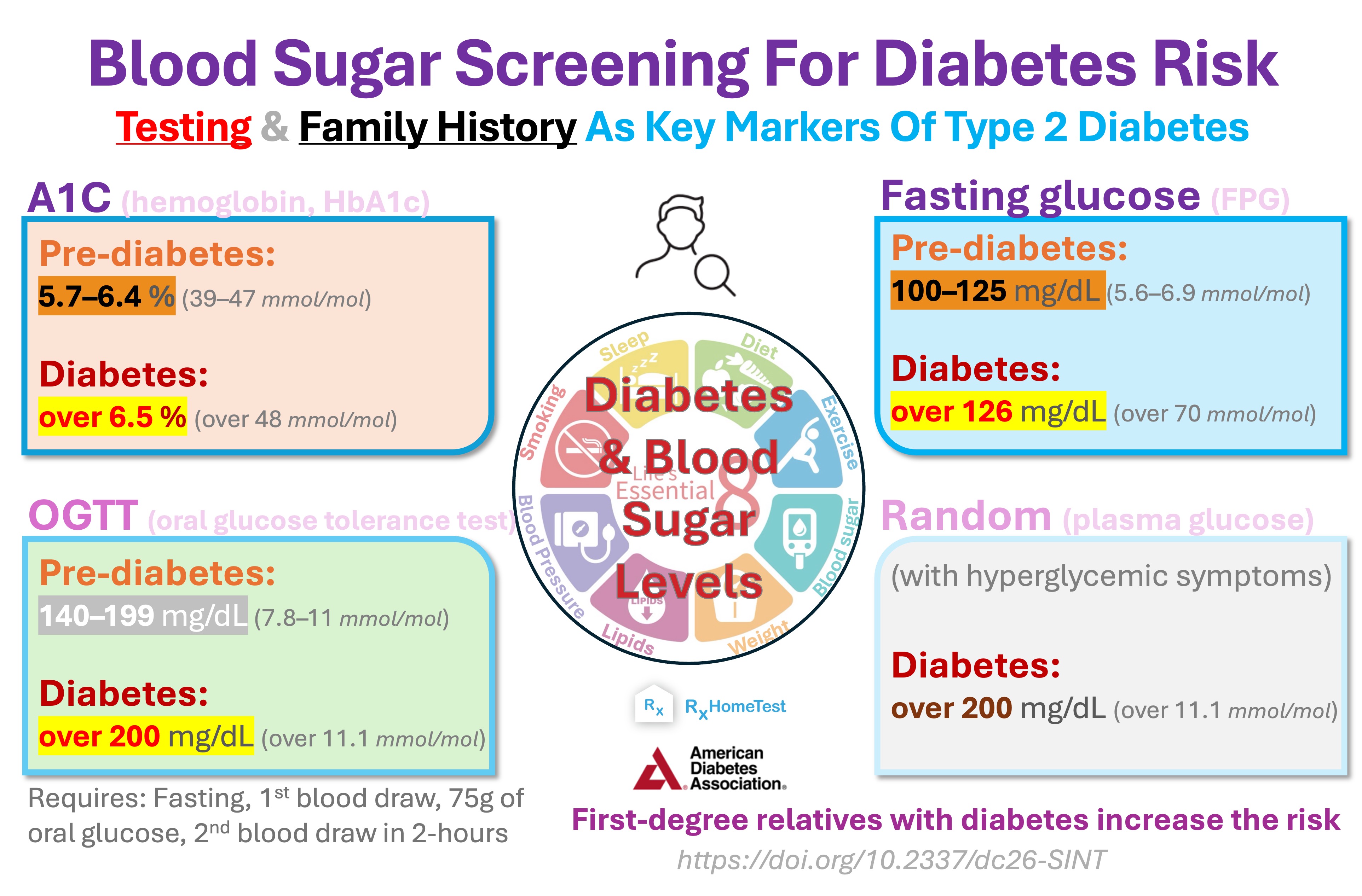
Figure 1: Diagnostic options for diabetes according to the American Diabetes Association. Blood sugar levels are one of the eight components of Life's Essential 8™ by the American Heart Association.
A: The test report includes four markers:
A1c : measures the percentage glycated hemoglobin (HbA1c) which is hemoglobin coated with sugar, which is an average of past 2-3 months.
Normal: below 5.7%.
Prediabetes: 5.7% to 6.4%.
Diabetes: over 6.4%.
Glucose (after 8-12 hours fasting): a 'snapshot' of blood glucose at the time of collection. For most accurate results, fasting for 8-12 hours is often required. A CGM (continuous glucose monitor) measures this value constantly.
Normal: below 100 mg/dL.
Prediabetes: 100 to 125 mg/dL.
Diabetes: over 125 mg/dL.
Insulin: the amount of insulin in the blood, to assess insulin resistance. It also helps in diagnosis of Type 1 or Type 2 diabetes (as the body often may not make any insulin in Type 1).
eAG: estimated average glucose over past 2-3 months; it is a conversion of A1c into same units as glucose (mg/dL or mmol/dL) for better comparison.
Since glucose binds to HbA1c, higher levels indicate higher glucose levels. As the red blood cells have a life span of about 90 days, the HbA1c test is a good indicator of average glucose levels over a period of 3 months.
HbA1c is not influenced by the daily variations of glucose but gives average value over a long period (although recent values dominate and aren't constant throughout the 2-3 months). It can not replace the daily glucose monitoring for those with diabetes. However, it is a useful reference to monitor over longer period for those with diabetes or prediabetes.
A: The sugar in our blood is used for energy by the cells, but this uptake is controlled by a hormone called insulin. It is produced in the pancreas and is essential for controlling the amount of sugar in our blood.
When the cells stop responding to insulin and thus reduce the uptake of sugar from blood, it is called insulin resistance. It leads to higher levels of glucose in the blood and more insulin production by the pancreas .
Insulin resistance often goes undiagnosed and may become worse with high belly fat, obesity, sedentary lifestyle, and family history. But exercise and other healthy lifestyle changes might reduce insulin resistance.
When the pancreas can't produce insulin (because the cells have died for various reasons, e.g., autoimmunity), the condition is called Type 1 diabetes.
If the body doesn't produce sufficient insulin (with age, lifestyle, etc.), the condition is called Type 2 diabetes.
Type 1 diabetes almost always requires external sources of insulin (a pump or injection). But Type 2 can sometimes be managed with exercise, lifestyle, diet, and other changes.
A: Those with possible signs of diabetes see unusual thirst and urinating, fatigue, and itching. Sugar craving is also frequently observed and it takes longer for wounds to heal.
Heredity plays a big role in diabetes and those with a family history of diabetes should check their blood sugar levels regularly.
Those with first-degree relatives with diabetes are at higher risk of elevated A1c and should check regularly to monitor their levels.
A: For a short description for A1c ranges, you can read the Medline.gov page on HbA1c test.
For understanding the difference between A1c and eAG, the average glucose levels, please see the American Diabetes Association's page on Standards of Care in Diabetes.
Learn why blood sugar is one of the critical components of Life's Essential 8™ from the American Heart Association.
You can also order a comprehensive at-home lipids panel to understand your risk of cardiovascular disease (CVD) from high HbA1c and fasting glucose.
A: Except New York and New Jersey most of our tests are available in all 48 states. State regulations in NY, NJ do not allow us to ship the tests to their residents.
A: The kit for our at-home blood sugar profile test contains a blood card to collect few droplets of blood, a pair of lancets for finger-pricking, instructions on how to collect the sample, and a form requesting basic information including date and time of collection.
The directions are straightforward and easy to follow.
A: You will receive the kit within 3-5 business days with a prepaid return envelope (for orders within US).
After you ship the sample back and it is received by our lab, results are normally available within 5-7 business days.
For orders outside US, we provide shipping to your address. However, you will need to find a way to return the sample back to the lab in US. Your kit will include the necessary paperwork for cross-border shipping.
Note: Once collected, the sample is valid for 12-14 days at room temperature. Therefore, please plan the shipping accordingly to avoid expiration and rejection.
A: The report for your blood glucose profile test will be easy to understand and will have all the necessary details. It will mark your A1c, insulin, fasting glucose and eAG levels.
The report will also specify what are the expected low and high ranges. It might briefly discuss what your numbers mean and what next steps should be taken to maintain healthy levels.
A: You can use HSA (or FSA/MSA/HRA) accounts to pay for the tests since these are prescription tests (for further confirmation, check the IRS publication#969). However, please ensure you are not going outside your specified max and min deductible limits. We do not have the capability to process insurance claims. Insurance plans vary by individuals, therefore we cannot guarantee your HSA payment will always be processed by your plan. Please talk to your insurance provider if you have any further concerns. Reach out to us for an itemized invoice, if you need to submit one.
A: We have partnered with CLIA-certified labs that are used by physicians across the US. These labs are regulated by the states, as well as Centers for Medicare and Medicaid Services (CMS). Majority of the tests from these labs are FDA approved to ensure they meet the proper regulatory requirements. Additionally, the College of American Pathologists (CAP) requires inter-laboratory tests to ensure the ranges established by each lab do not drift or are not out of acceptable ranges. This is done by regularly testing reference samples between different labs. Finally, the labs test thousands of sample for different age groups and health conditions, and have well established reference data to compare your results against this large pool.
A: Unfortunately, no. As a lab test provider we can only test and report out data from your samples. We are not authorized to provide any medical recommendations. But we strongly encourage you to discuss the results with your doctor for next steps. It is recommended to monitor the HbA1c levels every 3 months for healthy blood glucose levels.
A blood sugar profile test is one of the most common and convenient tests ordered regularly.
An at-home blood sugar profile can help check your blood glucose levels to confirm early signs of diabetes and insulin resistance, and whether you need to make any lifestyle changes to stay healthy.
High blood glucose increases the risk heart disease and is often one of the first tests recommended to monitor your health after a certain age.
An at-home blood sugar test is easy, convenient, and can help check your blood sugar levels right from the comfort of your home, without the need to visit a lab or doctor's office.
Better health results in better quality of life, and a regular at-home HbA1c test from RxHomeTest.com can offer insight not only into your health symptoms, but it can serve as a motivation to treat each of these symptoms and have a better quality of life!
7 reasons to order an at-home blood sugar profile test kit from RxHomeTest.com:
No lab visits or doctor appointment
Dry blood finger prick test (doesn't need a blood draw from a professional)
World class CLIA-certified labs
Physician reviewed results
Fast, secure, and confidential reports
Free shipping (and free return shipping within US)
Qualifies for payment using HSA/FSA
Still wondering where to get an A1c and blood sugar test?
Each at-home health test from RxHomeTest.com includes a physician’s prescription, supplies for self-collection, and free shipping. All orders include a detailed report with your test results explained clearly in a manner that you can understand.
RxHomeTest.com is one of the best places to get tested for diabetes and prediabetes as we process your tests at the same CLIA-Certified labs that other doctors use but no lab or doctor visit is necessary.
RxHomeTest.com offers one of the best tests for blood sugar test with convenient, confidential, and reliable results at some of the lowest prices in the market.
An at-home fasting glucose test is quick and easy, can be ordered online, and doesn’t require a doctor’s visit or prescription. This saves time and money on visits to the doctor and the lab.
The at-home A1c test ordered at RxHomeTest.com, requires just few drops of blood using a finger-prick (instead of vials of blood taken through venipuncture).