Article
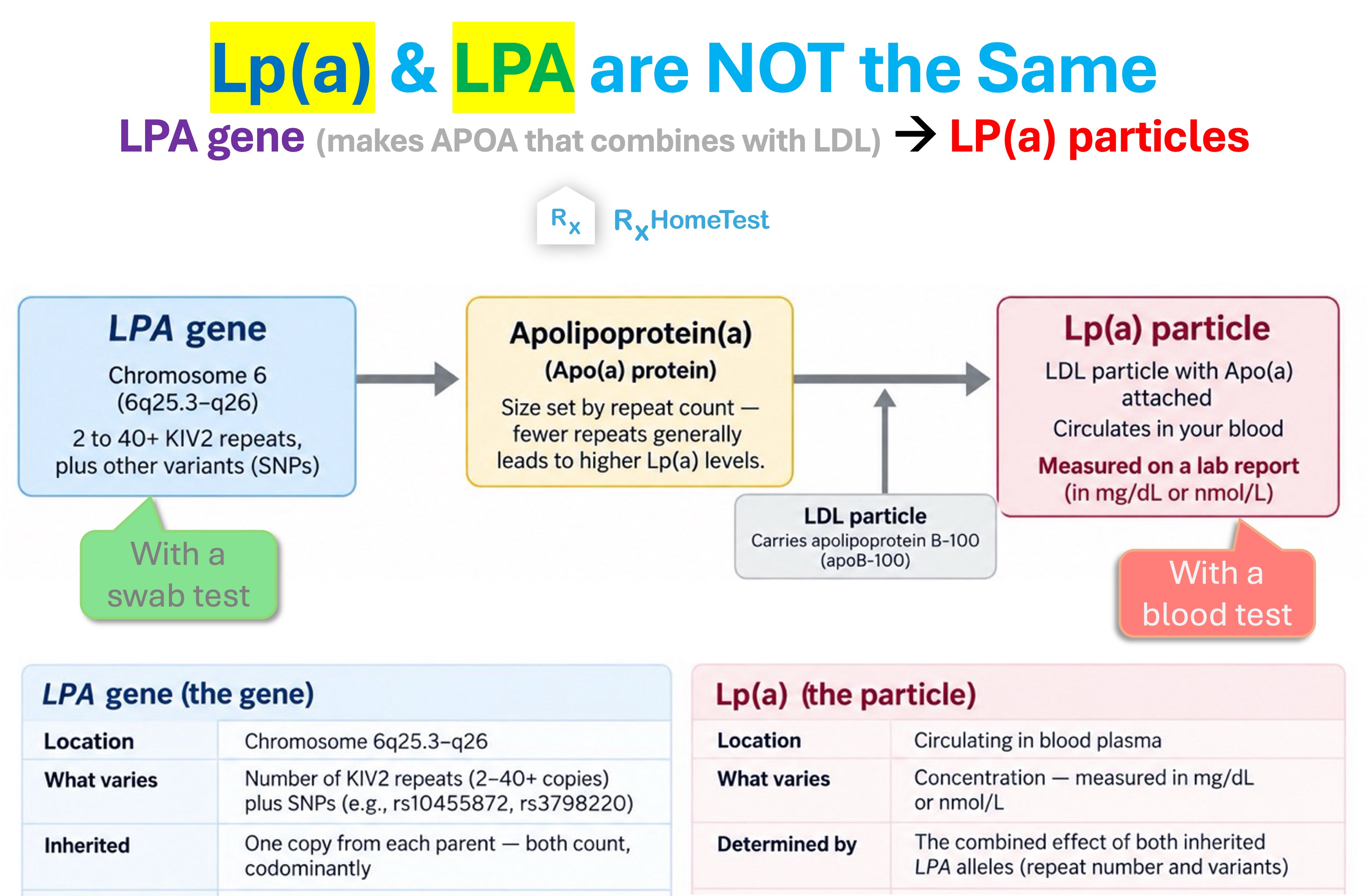
Here we clarify the confusion between Lp(a) and LPA markers and suggest testing options.
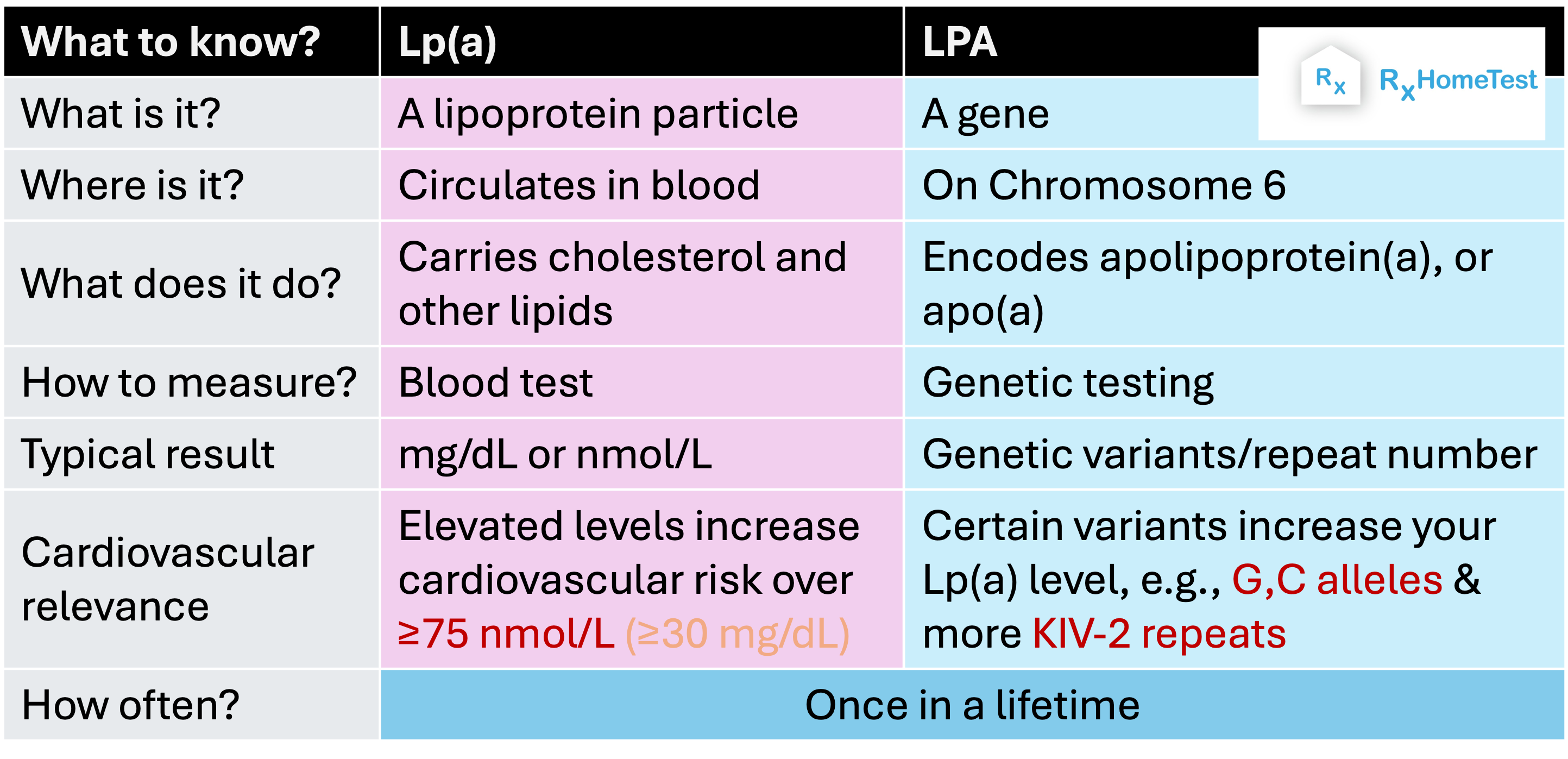
These two markers of heart health often cause confusion. Both are related to heart health and related to cholesterol and other lipids.
One is called lipoprotein-little-a or Lp(a) and the other is simply called lipoprotein a or LPA (gene).
LPA is a gene.
Lp(a) is a lipoprotein particle in your blood (similar to cholesterol).
Think of LPA as the genetic instruction and Lp(a) as the blood particle produced partly from those instructions.
The table below compares the key differences.
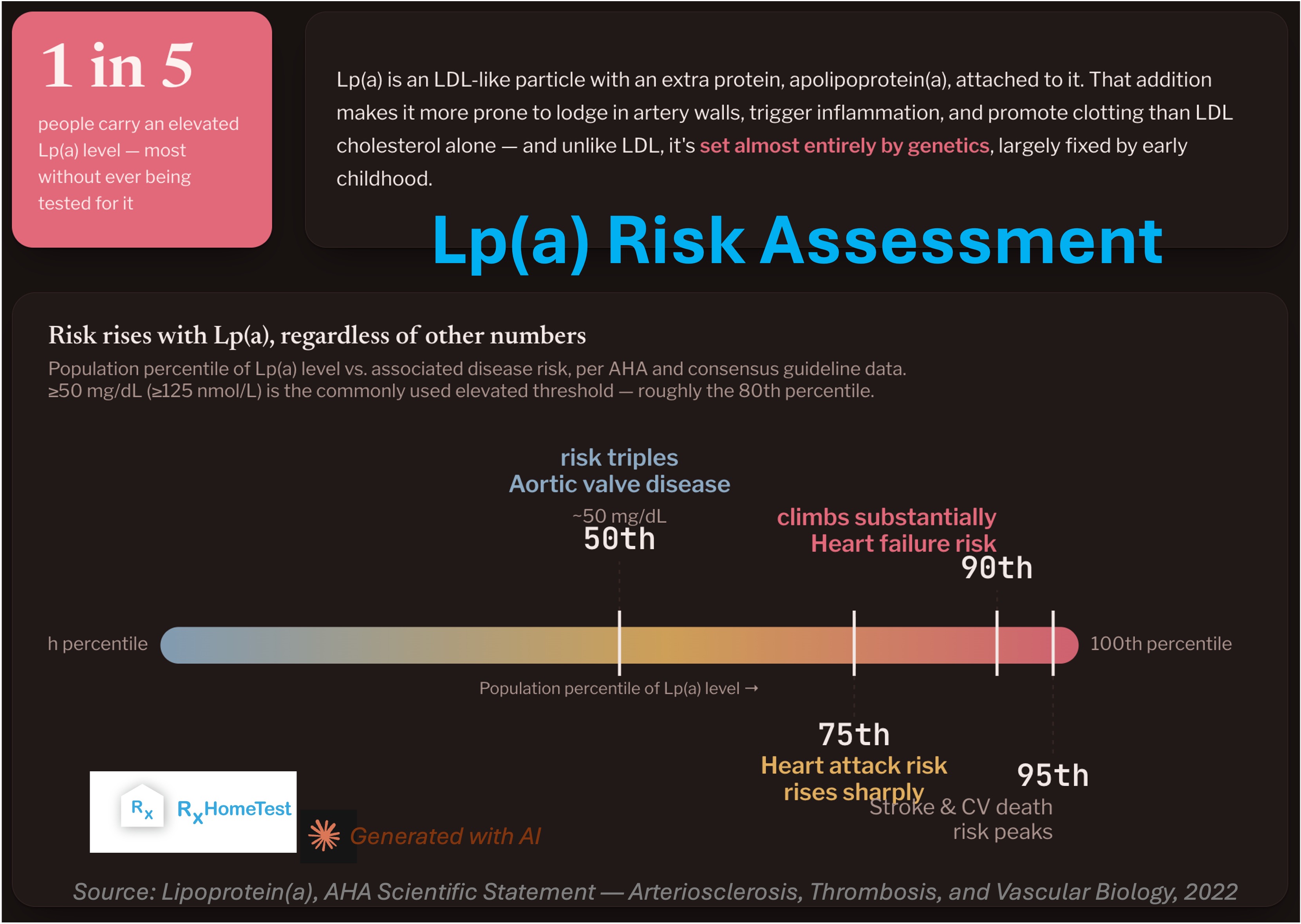
Lp(a) is LDL-like particle that is found to be elevated in about 1 in 5 people.
It is made from instructions given by the LPA gene to combine proteins, apolipoproteins A & B (also called APOA and APOB).
Lp(a) makes you more prone to build arterial plaque, inflame vessel walls, and promote clotting. It is a strong predictor of aortic valve damage.
It has not been part of a standard cholesterol panel. Only in 2026 the American Heart Association started recommending it (to test at least once in lifetime).
Therefore, most people never get tested for it, even though it's an independent risk factor for heart attack, stroke, and aortic valve narrowing.
It is known to raise this risk even in people whose LDL cholesterol looks normal.
Lp(a) is genetically fixed, i.e., you inherit it and there aren't many things you can do to change the results.
Below 75 nmol/L (roughly <30 mg/dL) - Lower
75–124 nmol/L - Intermediate
Over 125 nmol/L (roughly ≥50 mg/dL) - Elevated/risk-enhancing
Over 250 nmol/L - Very high
430 nmol/L or higher - Extremely high; often compared with the lifetime ASCVD risk associated with heterozygous familial hypercholesterolemia
The mg/dL and nmol/L values should not be converted using a single fixed conversion factor, because Apo(a) particle size varies between people.
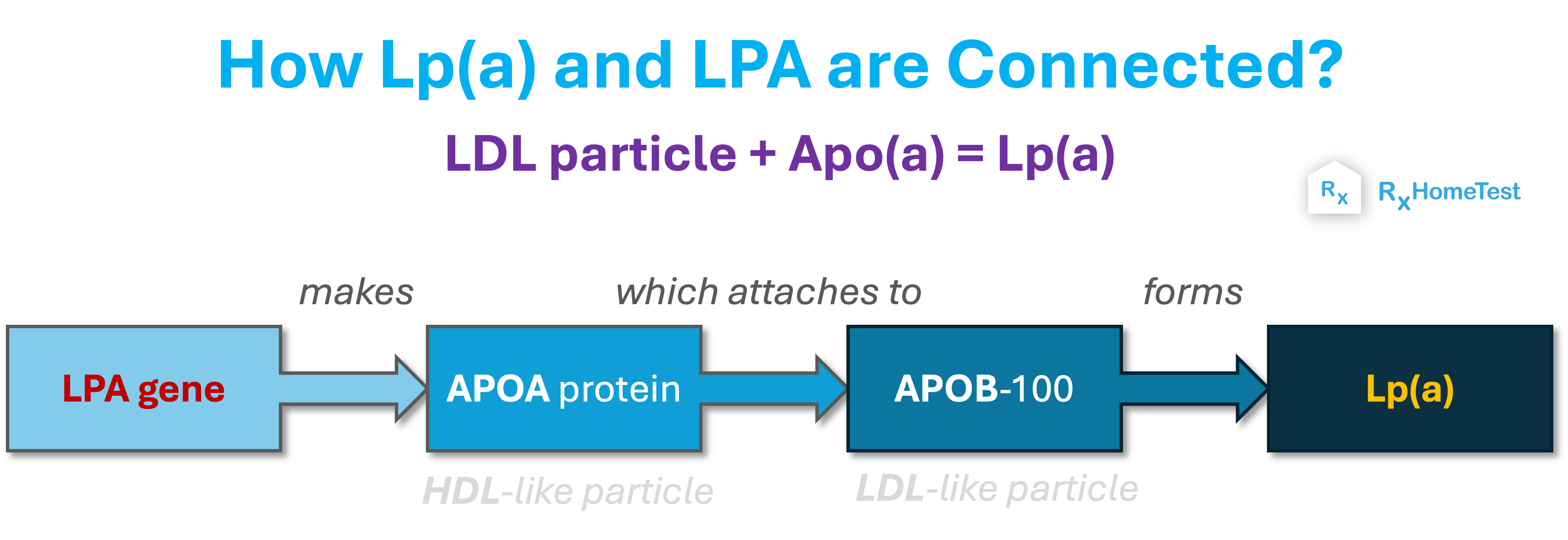
The LPA gene is the instruction set to make the protein Apo(a).
This protein then merges with an LDL particle to form the Lp(a) particle.
The LPA gene is located on chromosome 6q25.3–q26.
Depending on your test, a genetic test might report several different locations.
Here are some of them, their corresponding possible results:
rs3798220
TT: no C risk allele detected.
TC: one elevated-Lp(a)-associated allele.
CC: two elevated-Lp(a)-associated alleles; this is rare.
rs10455872
AA: no G risk allele detected.
AG: one elevated-Lp(a)-associated allele.
GG: two elevated-Lp(a)-associated alleles; this is uncommon.
LPA results are unusually complex. Therefore, AA or TT doesn't really mean “low cardiovascular risk.” Because, someone can carry neither of these variants and still have very high Lp(a).
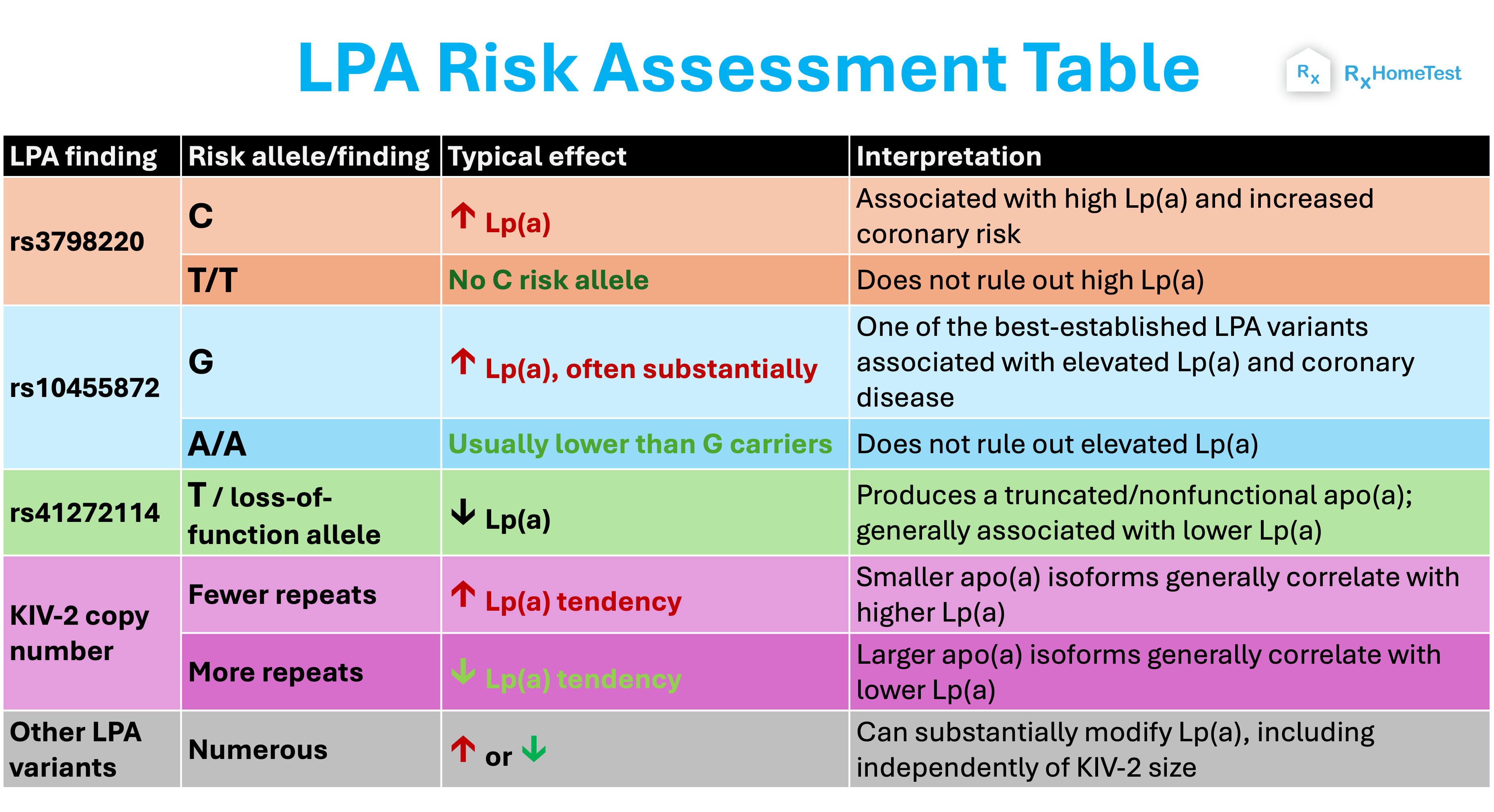
The LPA gene contains a highly variable region called kringle IV type 2 (KIV-2).
People inherit different numbers of these repeats, therefore KIV-2 includes copy-number variation, i.e., with the number of repeats differing dramatically between alleles.
Therefore, a comprehensive LPA genetic test is quite different from simple SNPs test.
It varies between people by its kringle-IV-type-2 (KIV2) repeat count, anywhere from 2 to 40+ copies, plus a handful of key SNPs.
In broad terms:
Fewer KIV-2 repeats → smaller Apo(a) → usually more Lp(a) in blood → higher risk
More KIV-2 repeats → larger Apo(a) → usually less Lp(a) → lower risk
But it's not a perfect one-to-one relationship.
Other sequence variants can alter Apo(a) production, therefore a KIV-2 result can't directly predict Lp(a) blood concentration.
Two people with similar repeat counts can have quite different blood Lp(a) as other LPA variants affect expression.
For clinical cardiovascular risk assessment, the blood measurement is generally more directly actionable.
LPA genotyping helps clarify the risk or benefit of aspirin therapy.
Those with higher CVD risk have been shown to benefit from low-dose aspirin.
However, without genes there isn't the same robust reduction in risk of cardiovascular disease from aspirin treatment as carriers do.
But taking aspirin can increase the risk of GI bleeding.
Therefore, an LPA test helps determine if the risk of serious GI bleed from aspirin therapy is greater than the benefit of CVD risk reduction.
TREATMENT CONSIDERATIONS IN PRIMARY PREVENTION
LPA variant present: Low dose aspirin therapy is beneficial and consider screening family members.
LPA variant absent: GI bleeding risk with aspirin therapy likely greater than CVD reduction benefit.
If your doctor orders an Lp(a) test, they're generally not testing your LPA gene.
They're measuring the concentration of Lp(a) particles circulating in your blood.
However, your LPA genetics are a major reason your Lp(a) level is high or low.
Lp(a) concentrations are largely genetically determined and tend to remain relatively stable throughout adult life compared with ordinary LDL cholesterol.
The blood Lp(a) concentration remains more clinically useful for estimating Lp(a)-mediated risk than a small SNP panel alone.
Genetic finding:
LPA rs10455872 A/G — one risk-associated G allele detected.
Interpretation:
This variant is associated with increased circulating Lp(a) concentrations and increased risk of atherosclerotic cardiovascular disease.
The genotype does not determine an individual's actual Lp(a) concentration.
Recommended follow-up:
Measure Lp(a) in blood, preferably using an assay reported in nmol/L.
For a comprehensive genetic test with KIV-2 info:
LPA variants + KIV-2 information → genetic predisposition → confirm/quantify with an Lp(a) blood test → interpret alongside LDL-C/ApoB and the person's overall cardiovascular risk.
For Lp(a), an at-home Lipids test includes several critical markers including Cholesterol, LDL, HDL, APOA1, APOB, hs-CRP, homocysteine and triglycerides.
For LPA, you can order an at-home Heart Health and Medication Risk Panel alongside markers such as APOE, MTHFR, Factor V Leiden, Factor II prothrombin, 9P21 for CVD risk, KIF6 for statin benefit, 4q25 for atrial fibrillation risk, CYP2C19 for Clopidogrel response and SLCO1B1 statin induced myopathy.
LPA shouldn't be presented like a simple pathogenic-variant test.
Its genetic architecture and the relationship between genotype and the measurable phenotype are considerably more complicated.
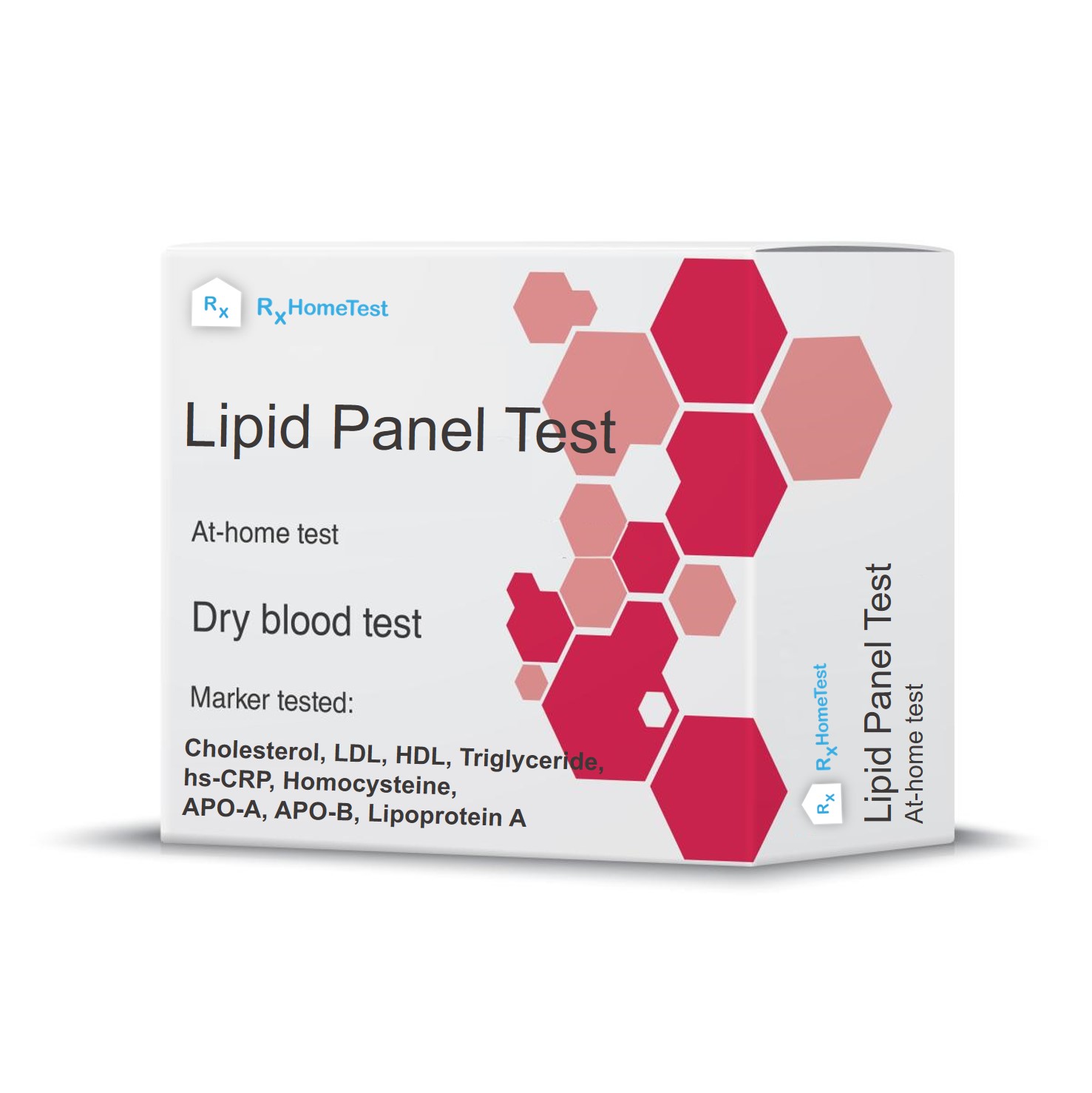
Order an at-home Lipids Test kit with Lp(a), APOB, cholesterol and several key markers.
APOE and Correlation to Alzheimer's, CVD, and Dementia - Learn more about the risks from APOE genes in detail.
Role of APOE in Alzheimer’s and Longevity - Learn how APOE4 genes affect longevity and risk of dementia and Alzheimer's.
APOE4 and Alzheimer’s - FAQs - ApoE4 is the biggest predictor of Alzheimer's disease.
Genetic Testing and Disease Inheritability - How to know genes affect the diseases we inherit.
Genetic Variants of Heart Disease - Look at all the markers responsible for affecting heart health.
Celiac Disease and Genetic Risk - Celiac is one of the diseases with very clear genetic causes.
COMT Gene - For Neurotransmitters, Anxiety & Mental Health - Learn about COMT gene's role in dopamine metabolism.
MTHFR gene and Heart Health - Learn more about risks due to certain MTHFR genes to your heart.