Article
COMT gene and enzyme can affect behavior, personality, emotions and thinking. Here we review the genes, the enzyme they make, and what variations can do to our health, especially for pain sensitivity and emotions.
We often notice that some people are emotionally more stable, but others tend to lose their nerves quickly.
We probably know someone with tendency to abuse alcohol or drugs and friends who are bipolar or schizophrenic.
Some people tend to be too scared of pain whereas others can handle it without complaining.
One common theme among all of them seem to be the COMT gene.
It is the strongest known modulator of personality and emotions.
Depending on the COMT gene variant, we have very different abilities to digest certain neurotransmitters, that are at the core of our behavior (such as dopamine).
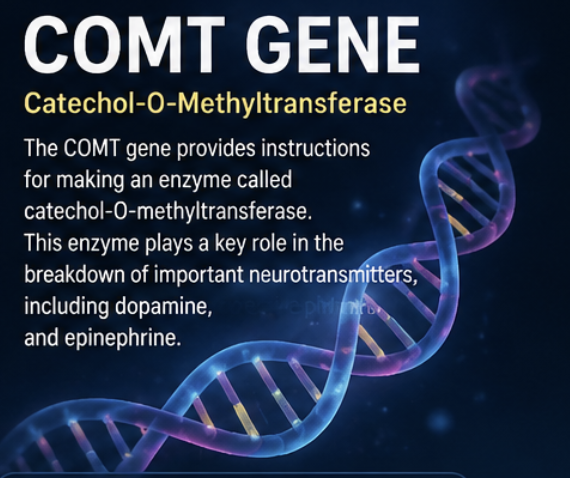
COMT (pronounced as com-tee) is a gene that makes a enzyme of the same name. Enzymes are proteins that help in reactions (e.g., converting fats and oils into fatty acid molecules).
The term COMT is short form for Catechol-O-Methyltransferase. The gene that makes this protein is also called COMT.
It is a protein found mainly in the brain and nerves.
To understand COMT, we should also understand Catechols and Catechol-amines.
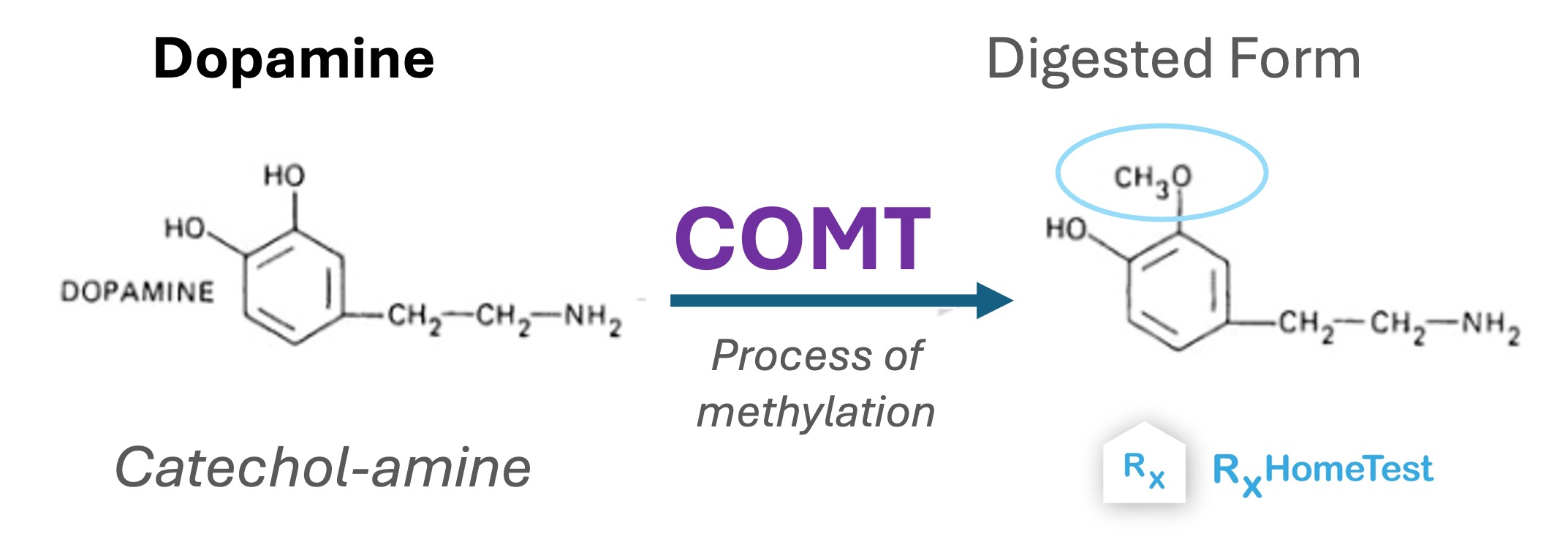
See the figure below.
Technical Bit:
Catechols are certain chemicals with a benzene ring & two alcohol (–OH) groups.A Catechol-amine is formed when an amine (-NH2) is added to it.
Due to this unique combination (both OH and NH2 groups in the same molecule), these are highly active compounds.
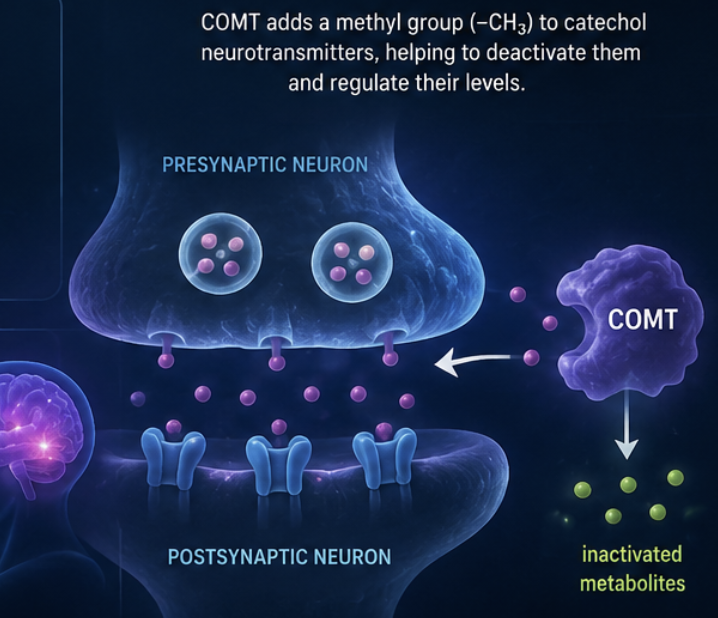
COMT is the protein that slows them down by neutralizing the OH groups with addition of a less reactive methyl (-CH3) group.
Therefore, in the brain and nerves, COMT is the cleaning crew that helps clear (or inactivate) chemical messages after they've done their job.
There are three main forms of Catecholamines:
Dopamine
Adrenaline (also called epinephrine)
Noradrenaline (also called norepinephrine)
Dopamine is related to the 'pleasure' part of the nervous system.
Adrenaline and noradrenaline are involved in the 'fight or flight' response. For example, a sudden adrenaline boost from fear, or use of an epi-pen to give someone a shot of adrenaline to respond from an asthma attack.
Several synthetic forms are also available as medicines, e.g., dobutamine and isoproterenol, both as heart medication.
Sketch below shows COMT in action:
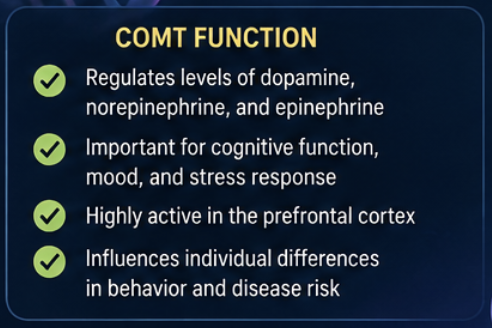
As a 'switch' it helps control chemical signals passing from one neuron to another.
Some neurotransmitter chemicals are inactivated/deactivated.
This ability of deactivation depends on which version of COMT one has.
It is especially important in the prefrontal cortex of the brain (because of fewer dopamine transporting molecules).
Prefrontal cortex is the region of brain where learning, memorization and decision making happens.
The COMT gene has a well-studied single nucleotide polymorphism (SNP) where the amino acid at position 158 is either Valine (Val) or Methionine (Met).
This is often called with it's technical position rs4680.
Methionine (Met) containing enzyme is less thermostable, resulting in lower enzyme activity.
This creates a different enzyme with dramatically lower ability to metabolize these neurotransmitters and catecholestrogens.
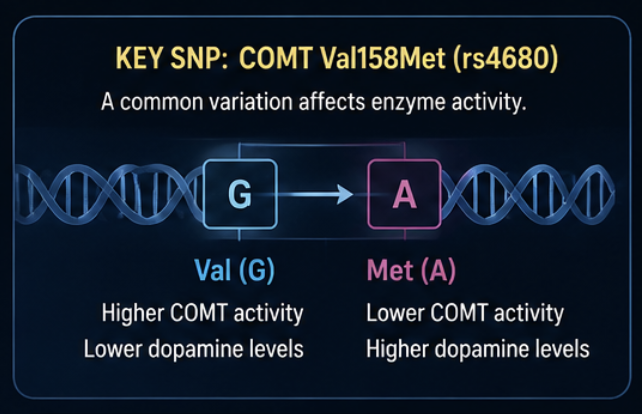
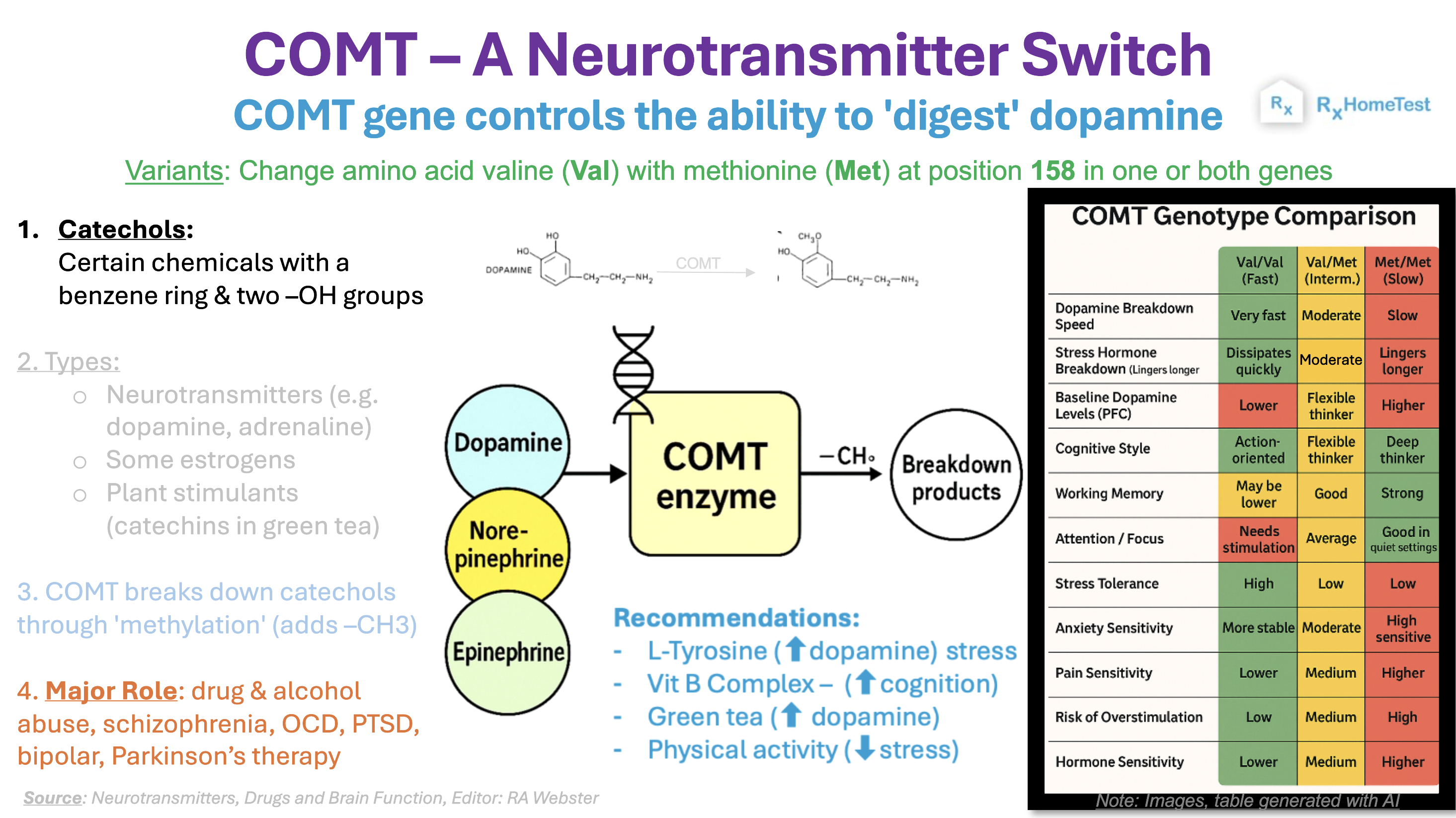
Val/Val: Higher COMT enzyme activity → faster dopamine breakdown → lower baseline prefrontal dopamine
Met/Met: Lower COMT enzyme activity (about 3-4x less active) → slower dopamine breakdown → higher baseline prefrontal dopamine
Val/Met: Intermediate activity
A more detailed table with additional factors impacted by the gene allele variants:

COMT has the most impact in prefrontal cortex as there are fewer competing molecules in this region of the brain.
This table summarizes possible effect from COMT variants:
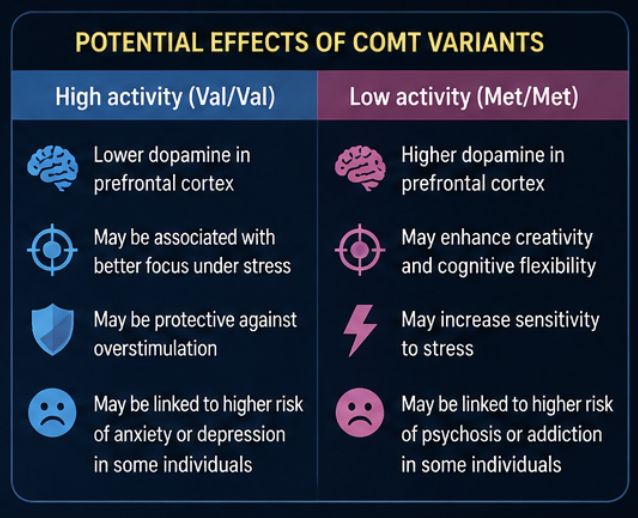
There is popular "warrior vs. worrier" framing often heard in social media:
Met/Met ("worrier"): Better baseline working memory and cognitive stability, but more sensitive to stress; under high-pressure or high-arousal conditions, dopamine can rise too high and impair performance.
Val/Val ("warrior"): Worse baseline cognitive performance in calm conditions, but more resilient under stress, since their lower baseline dopamine has more room to rise into an optimal range under pressure.
However, there's an optimal middle zone, and both too little or too much can hurt cognition function.
Where your baseline sits (set partly by COMT genotype) determines how much stress helps or hurts you.
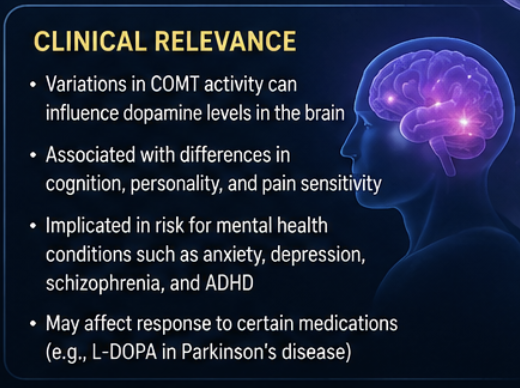
Parkinson's disease involves progressive loss of dopamine-producing neurons.
The mainstay treatment, levodopa (L-DOPA), works by supplying the raw material for dopamine synthesis, since dopamine itself can't cross the blood-brain barrier but its precursor can.
The problem is that levodopa gets metabolized by multiple enzyme systems before much of it ever reaches the brain.
COMT is one of the main culprits: it methylates levodopa directly, converting it into 3-O-methyldopa, a compound that's biologically inert as far as dopamine replacement goes.
This happens both peripherally (in the gut wall, liver, and blood) and centrally.
The other major peripheral enzyme involved is DOPA decarboxylase (DDC), which converts levodopa into dopamine before it reaches the brain, useless and potentially nausea-inducing, since peripheral dopamine doesn't help motor symptoms and can cause side effects.
This is why levodopa is virtually never given alone.
Standard therapy pairs it with a peripheral DDC inhibitor (carbidopa or benserazide) to block that pathway.
But even with DDC blocked, COMT remains active and continues siphoning off levodopa via the methylation route, converting a substantial fraction of each dose into that inactive 3-O-methyldopa byproduct before it reaches the brain.
As Parkinson's progresses, this becomes a bigger clinical problem.
Early in the disease, surviving dopamine neurons can buffer fluctuations in levodopa supply reasonably well.
But as more neurons die, the brain loses its capacity to store and steadily release dopamine, so motor control becomes much more sensitive to the peripheral pharmacokinetics of each levodopa dose.
Patients start experiencing "wearing-off" phenomena—the medication's benefit fading well before the next dose is due—and motor fluctuations between "on" (good mobility) and "off" (return of stiffness, slowness, tremor) states.
Extending how long each dose of levodopa stays available in the bloodstream becomes clinically important, and that's where COMT inhibition comes in directly.
COMT inhibitors are add-on therapies used specifically to extend and smooth out levodopa's (L-DOPA) effect.
They have no meaningful antiparkinsonian effect on their own, since they don't add dopamine, they just slow the breakdown of the dopamine precursor.
Entacapone is the most widely used COMT inhibitor.
It acts only peripherally (it doesn't cross the blood-brain barrier well), blocking the conversion of levodopa to 3-O-methyldopa in the gut and bloodstream, so more of each dose reaches the brain and it stays available longer.
It's taken alongside every levodopa/carbidopa dose. It's also available in fixed combination pills that bundle all three drugs together (levodopa, carbidopa, and entacapone) into a single tablet, sold under various trade names, to simplify dosing.
Tolcapone is the other approved COMT inhibitor, and unlike entacapone it does cross into the brain, giving it both peripheral and central COMT inhibition.
This makes it somewhat more potent, but it carries a serious risk of hepatotoxicity (liver damage), including rare fatal cases.
Because of this it requires regular liver function monitoring and is generally reserved as a second-line option when entacapone isn't providing adequate benefit.
Opicapone is a newer, longer-acting peripheral COMT inhibitor (once-daily dosing).
It's been approved more recently in various markets as an alternative to entacapone, with the appeal of less frequent dosing and, in some head-to-head trials, more consistent COMT inhibition throughout the day.
The clinical effect across this class is measured mainly in terms of increased "on time" (time with good symptom control) and reduced "off time" per day.
These are typically on the order of an extra hour or so of good motor function daily in clinical trials, which is meaningful for patients experiencing wearing-off.
Common side effects relate to the increased dopaminergic exposure itself (worsened dyskinesias, nausea, orthostatic hypotension) rather than being independent toxicities, tolcapone's liver risk being the notable exception.
Entacapone can also cause harmless orange discoloration of urine, since the drug and its metabolites are excreted that way.
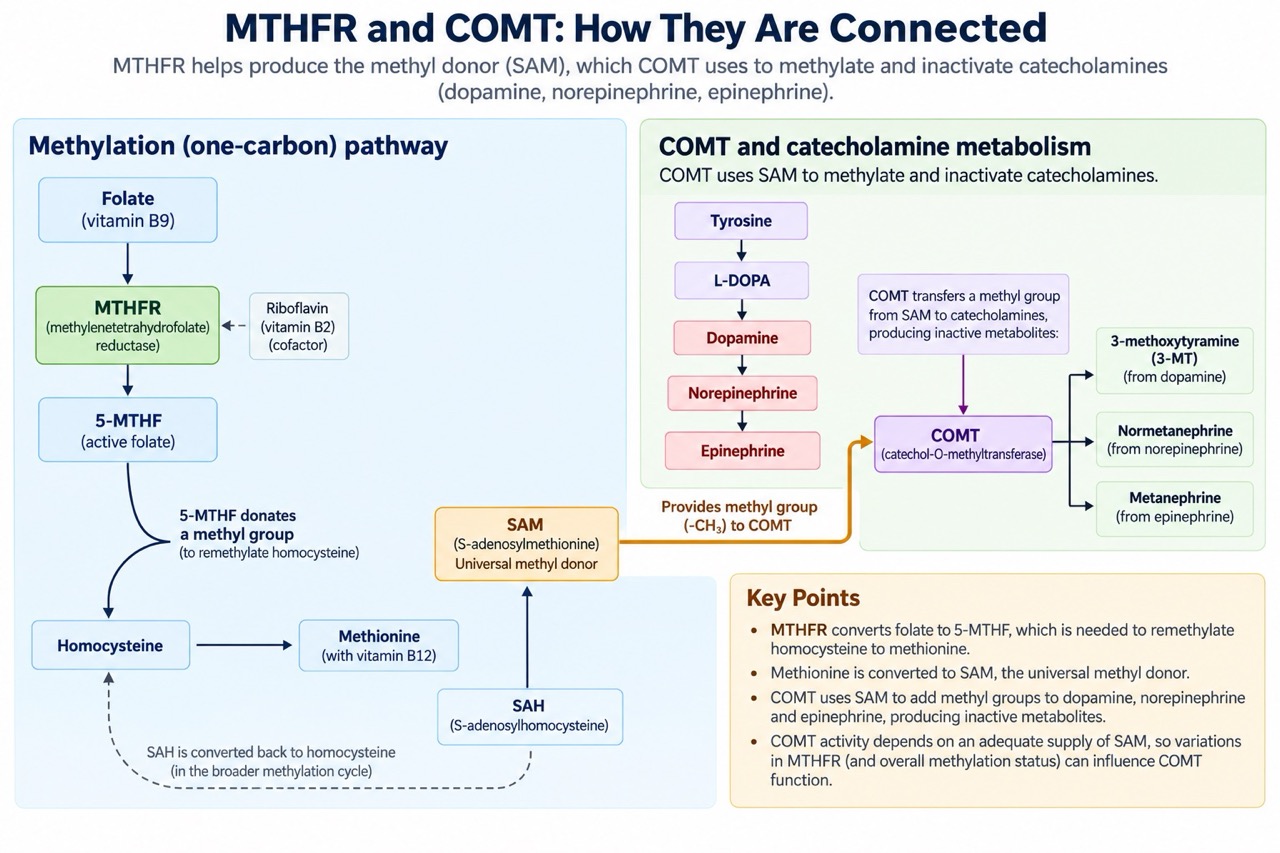
COMT works by taking a methyl group from a molecule called SAMe (S-adenosylmethionine) and attaching it to dopamine, norepinephrine, epinephrine, or catechol estrogens, which inactivates them.
COMT is one of the biggest consumers of SAMe in the body—it's a methyltransferase, and "transferring a methyl group" is literally its job description.
MTHFR (methylenetetrahydrofolate reductase) sits far upstream in a completely different part of metabolism: folate processing.
MTHFR converts a folate form into 5-methyltetrahydrofolate (5-MTHF, often called "active" or "methylated" folate), which is the specific form of folate needed to remethylate homocysteine back into methionine.
Elevated homocysteine are a known cardiovascular risk factor. Also, MTHFR status is highly relevant to manage folate levels during pregnancy to avoid neural tube defect in a newborn.
So the MTHFR to COMT chain looks like: folate → (MTHFR) → 5-MTHF → homocysteine converted to methionine → SAMe → (COMT and other methyltransferases) → methylated products.
There's a real biochemical link (folate metabolism feeds the methyl pool that COMT draws from), but it's not always necessary that the overlap in the pathways of COMT and MTHFR can explain my mental health issues such as anxiety, depression or forgetfulness.
Research on the role of COMT is still ongoing. A few things one should know:
Although the role of COMT is well studied and established, it is one of the several factors in controlling our behavior.
COMT is an enabler, it adds value on top of so many other factors that the impact for most people may be modest and not be as outsized as we might expect.
Outside the prefrontal cortex region, role of COMT might not be as significant compared to other enzymes.
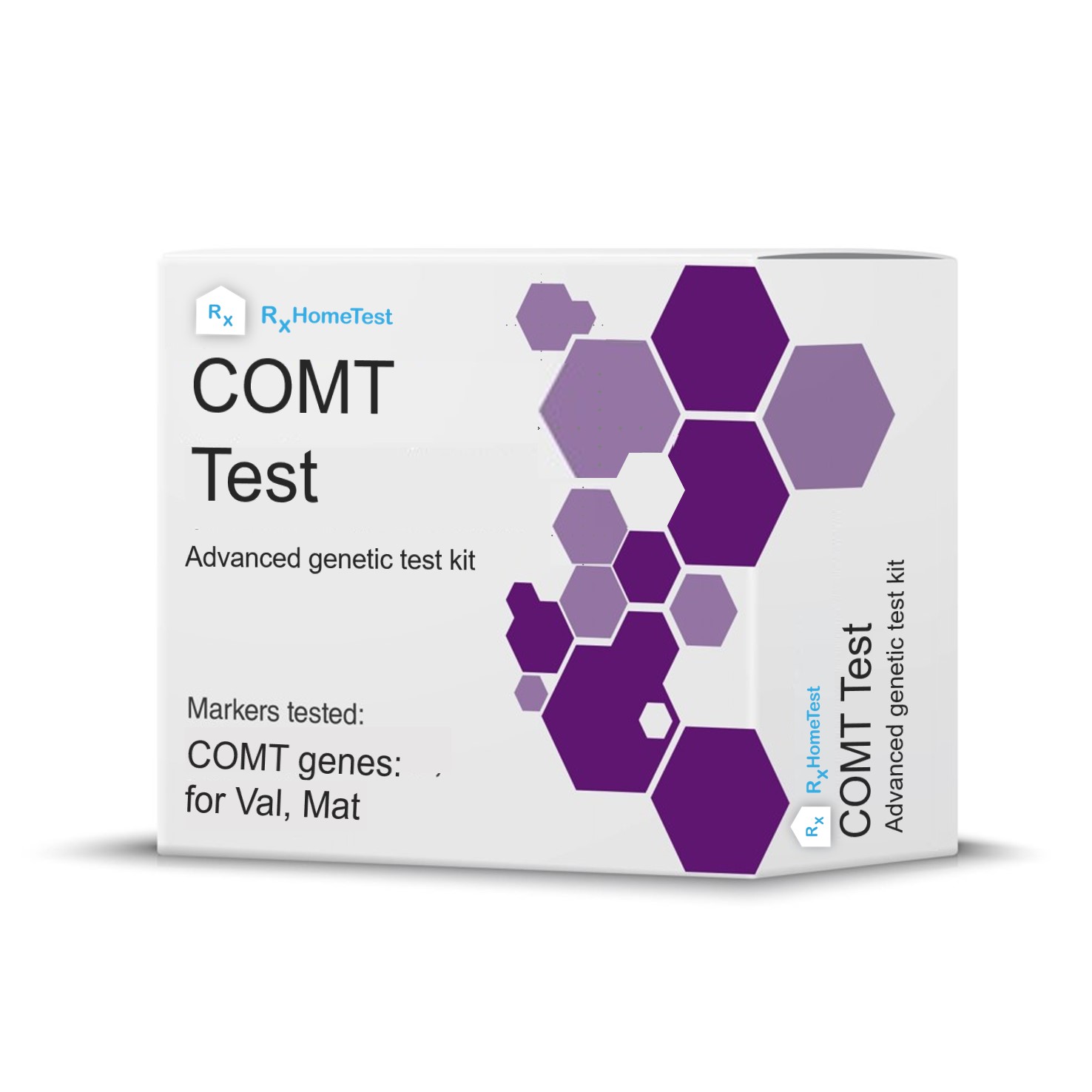
Order a COMT genetic test kit.
MTHFR Gene and Heart Health - Learn how MTHFR genes & homocysteine levels can affect heart health.
CRP, Inflammation, and Risk of Heart Disease - a comprehensive review of C-reactive protein.
Lp(a) vs LPA - What's the Difference? - differences and testing options.
Cardiovascular Disease and Vitamin D - a comprehensive review of the role Vitamin D plays in heart health.
Genetic Variants of Heart Disease - A detailed look at the critical role genes play in heart diseases.
Genetic Testing and Disease Inheritability - Test and tell: how genes pass on diseases from parents to children.
Longevity, APOE and Alzheimer’s - Learn about APoE and it's role in Alzheimer's and life span.
